Age of Empires Mobile
- 4.2
- Rating
- 10.00M
- Installs
- Free
- Price

 Analysis by App-foxy
I approached Age of Empires Mobile expecting a familiar name adapted for touchscreens, but the experience is better understood as a mobile strategy game with a strong historical identity rather than a direct replacement for the classic computer games. It is free to start, belongs to the strategy category, and comes from Level Infinite. After spending time with it, I found that its appeal depends less on quick battles and more on how comfortably you enjoy planning several moves ahead while checking progress in short sessions.
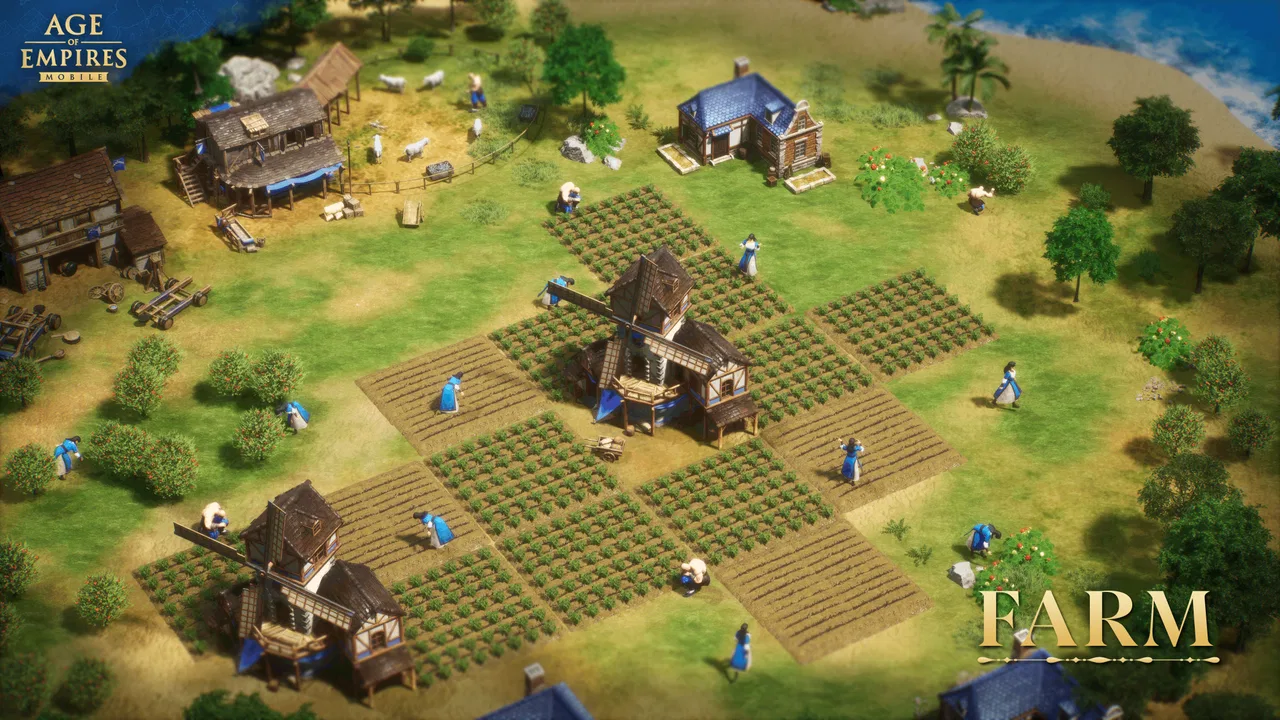
The basic attraction is easy to understand: you develop a medieval settlement, organize resources, improve your military position, and make decisions that affect what you can do later. The interesting part is that every upgrade competes with another possible use of your time and materials. Choosing military growth may leave your economy feeling tight, while focusing on construction can make you feel exposed. That tension gives the game its personality.
It has a 4.1 average from around 397 thousand ratings, with more than 10 million installs. Those figures suggest a broad audience, but they do not tell you whether its rhythm will suit you. In my experience, this is a game for players who like watching a plan take shape over time, not for someone looking for a self-contained match that starts and ends in ten minutes.
You May Also Like

 Blood Strike: 2.5 Anniversary
Blood Strike’s Loadouts Turn Every Drop Into a Tactical Gamble
A close look at Blood Strike’s custom loadouts: how fast access to signature weapons reshapes its battle royale rhythm, rewards preparation, and narrows the gap between fights.

 Pandora - Music & Podcasts
Pandora’s Music Is Easy to Start, but Harder to Recover
Pandora’s strength is its low-effort path from a seed to a station. Its weak spot is how much confidence it asks you to place in connection, setup, and quiet recovery.

 8 Ball Pool
 Is Built on Rivalries, Rematches, and Routine
A close look at the rivalries, rematches, shared routines, and unanswered safety questions that turn a quick pool match into a persistent mobile community.

 Samsung Music
’s Quiet Strength Is Playing What You Already Own
Its reach comes less from spectacle than from dependable access to a personal library. That simplicity is both the app’s strongest retention engine and its ceiling.

 AccuWeather: Weather Radar
AccuWeather Review: A Quick, Clear Forecast for Everyday Decisions
For everyday plans, the best forecast is the one you can understand quickly. AccuWeather makes rain timing, radar, and local conditions easy to act on, with a few trade-offs.

 Hill Climb Racing
Why Hill Climb Racing Still Turns Crashes Into One More Run
A tiny car, a bumpy hill and one more upgrade: Hill Climb Racing keeps resurfacing because its simple chaos makes every near-miss feel personal.
More From Our News Desk



Where the important decisions really happen
The first decisions look straightforward because the early objectives guide you through the main flow. Build something, improve something else, recruit units, and continue expanding. The challenge appears when several tasks become available at once. You cannot treat every improvement as equally urgent, so I learned to ask what the next obstacle would be before spending resources on the most attractive upgrade.
That small habit makes a noticeable difference. If a building is close to unlocking a more useful option, finishing it may be better than spreading resources across several minor improvements. On the other hand, concentrating everything on one long project can leave the rest of your settlement behind. I found the best approach was to keep a short list of priorities: one immediate requirement, one economic improvement, and one military or defensive goal.
This is where the game separates itself from simpler mobile strategy titles. It is not only about tapping the brightest button. The order of actions matters. A resource spent now can delay a more valuable development, and a decision that feels efficient in isolation may create a bottleneck later. I recommend checking what each upgrade enables before committing, especially when the cost is significant for your current stage.
The medieval setting also helps the decisions feel coherent. I was not simply improving abstract menus; I was trying to make a growing settlement more capable of supporting armies and future expansion. The connection is not as deep as a full desktop simulation, but it gives the progression a clear direction and makes the planning easier to follow.
How I plan a session instead of tapping randomly
My most useful routine was to begin each session by reviewing unfinished construction, available research or development choices, and the condition of my military plans. That prevented me from starting a new task just because it was visible. I then selected one goal that would improve the next session rather than only the current one.
For example, if I knew I would be away from the game for a while, I preferred a longer development task that would be meaningful when I returned. During a shorter break, I handled quick objectives and reorganized my next steps. This simple distinction made the game feel less demanding and reduced the temptation to spend resources impulsively.
A second useful rule is to avoid upgrading purely for appearance or completion percentage. A settlement that looks advanced can still be poorly prepared if its economy cannot support the army you want. I had better results when I treated every military ambition as a budget question: can my current production and storage sustain it, or am I creating a temporary force that will slow everything else down?
The strongest early advantage comes from sequencing, not from clicking faster. That is an important point for new players. The game rewards attention to dependencies, and a calm player who understands the order of improvements can progress more comfortably than someone who simply reacts to every prompt.
What the interface communicates well, and where it creates friction
The touch controls are approachable, and the guided beginning makes the core loop understandable. I rarely felt lost about the immediate objective. The friction appears later, when several systems compete for attention and the screen presents more possible actions than I actually need.
Mobile strategy games often struggle with this balance. Too little information makes planning impossible; too much makes the game feel like an administrative checklist. Age of Empires Mobile sometimes leans toward the second problem. I had to slow down and decide which notifications mattered instead of treating every available action as urgent.
That is not a reason to avoid it, but it affects the ideal player. If you enjoy organizing a growing list of tasks, the density can feel satisfying. If you prefer a clean interface and one clearly defined objective, the later progression may feel busy. I would not recommend beginning it during a rushed commute if you know you become impatient with menus and timers.
Risk, reward, and the cost of moving too quickly
The game’s most interesting trade-off is between immediate strength and long-term flexibility. A quick military investment can make you feel safer, but it may delay the economic foundation needed to maintain that strength. A development-heavy plan can produce better options later, yet it may leave you uncomfortable in the short term.
I found that the best decisions were rarely the most dramatic ones. Small improvements that kept resources flowing often created more value than a single impressive purchase. This is especially true when you are still learning the pace of your settlement. Early mistakes are not disastrous, but they can make the next stretch feel slower because your choices have already shaped what is affordable.
That makes the game more thoughtful than its free-to-play structure might suggest. There is room to make good decisions without paying, but patience becomes part of the strategy. The game is free, while individual in-app purchases range from $0.99 to $99.99. I would treat spending as optional convenience rather than as a substitute for planning. If a player dislikes waiting or feels pressured whenever progress slows, the purchase model may become the main source of frustration.
My advice is to set a personal boundary before playing. Decide whether you are comfortable progressing at the free pace, and do not let a nearly completed objective persuade you to spend simply because you are impatient. The game is easier to enjoy when purchases remain a choice instead of becoming the answer to every delay.
When a bold move is worth the exposure
Risk makes sense when it opens a clear advantage. Expanding your ambitions because you have identified a useful next step is different from acting because the game has presented an attractive button. Before committing to a costly military or development decision, I looked at what it would unlock and what it would prevent me from doing immediately afterward.
This is also where planning horizons matter. A decision can be poor for the next few minutes but good for the next several sessions. Conversely, an action that produces a quick reward can leave you with fewer options later. I enjoyed the game most when I stopped judging every choice by its immediate result and started asking whether it improved my position over a longer stretch.
One practical example is keeping enough flexibility for unexpected requirements. I did not spend every available resource the moment it arrived. Holding a reserve made the settlement less vulnerable to sudden needs and gave me room to respond when the next objective did not match my original plan. That restraint is easy to overlook, but it prevents many self-created delays.
Players who want constant action should know that this is not a pure battle game. Much of the satisfaction comes before conflict, in preparation and allocation. If your favorite strategy games are built around rapid tactical commands and immediate reversals, this may feel too measured. If you like the anticipation of a plan becoming possible, its slower pace is a strength.
What the free-to-play structure changes in practice
The presence of purchases does not erase the strategy, but it changes how you evaluate time. A player who spends can reduce some friction, while a free player must be more selective about priorities and more willing to wait. That difference is important when comparing it with premium strategy games, where the main challenge is usually learning the rules rather than deciding whether progress is worth accelerating.
I would place this game closer to a long-running mobile strategy routine than to a one-time campaign. It is easy to check regularly, make a few decisions, and leave. That convenience is useful, but it also means the game can occupy more attention than expected. I recommend turning off the habit of checking every small update and instead playing at deliberate intervals.
The age rating is Teen, which fits the medieval conflict and competitive atmosphere. Parents should still consider the combination of ongoing progression and optional spending when deciding whether it is suitable for a younger player. The rating alone does not describe how strongly a child may respond to waiting, competition, or purchase prompts.
Adapting when the first plan stops working
No plan survives unchanged once the game gives you new demands. I liked that adaptation was not limited to changing units or tapping a different command. It also meant changing the order of construction, reconsidering how much military growth I could afford, and accepting that an earlier priority might no longer be the best one.
A common mistake is to continue investing in a plan simply because it has already consumed time and resources. I had better results when I treated previous spending as a lesson rather than a reason to continue. If the economy was struggling, I paused ambitious expansion and repaired the foundation. If progress felt safe but stagnant, I shifted attention toward capabilities that created new options.
This makes the game approachable for beginners while still offering room for experienced players to refine their routines. You do not need perfect knowledge at the start. You need to notice what is slowing you down and adjust before the problem grows. The game is forgiving enough for experimentation, but not so frictionless that choices become meaningless.
How to recover from an inefficient opening
If your first development choices are messy, I would not restart immediately. Instead, identify the most limiting resource or requirement and make that the center of the next few decisions. Stop adding commitments that depend on the weak area, then use smaller improvements to restore balance.
Another useful recovery method is to separate “must finish” tasks from “nice to have” tasks. The former keeps progression moving; the latter can wait. This prevents a crowded queue from hiding the one improvement that would actually solve the problem. It also makes the game less intimidating because you are no longer trying to optimize everything simultaneously.
For players returning after a break, I suggest spending one session observing rather than immediately rebuilding your entire plan. Review what is already in progress, see which options are now available, and then choose a modest target. Returning players often waste time undoing a workable setup because they feel they need to catch up instantly.
The game rewards this patient form of adaptation more than frantic correction. I never felt that a single imperfect choice permanently ruined the experience, but repeated impulsive choices could certainly make it less comfortable. That distinction is reassuring for newcomers and useful for anyone who normally abandons strategy games after an inefficient start.
Why the depth grows over time
At first, the progression can feel like a guided sequence of upgrades. Later, the same actions become connected to broader questions: what kind of settlement am I building, how much military pressure can I support, and which improvements will give me more choices rather than only a larger number?
That gradual shift is the game’s main strength. It does not demand that you understand every layer immediately. Instead, it allows the early structure to teach the rhythm before asking you to manage competing priorities. I appreciated that because a complex strategy interface can otherwise feel like work before it becomes enjoyable.
The downside is that the long-term experience depends heavily on your tolerance for repetition and waiting. The core decisions remain meaningful, but the surrounding routine can become familiar. Players who need a new tactical puzzle every few minutes may prefer a traditional match-based strategy game. Players who enjoy nurturing an account and seeing gradual improvement will find more to appreciate here.
Compared with classic real-time strategy games on a computer, this mobile version is more comfortable for intermittent play but less suited to precise, uninterrupted battlefield control. Compared with simpler city-building games, it gives military planning a more central role and asks you to think about preparation rather than decoration alone. Compared with premium mobile strategy games, its free entry is convenient, but the purchase and waiting structure demands more self-control.
That comparison helped me understand who should choose it. I would recommend it to someone who likes the Age of Empires identity, wants a strategy game that can be checked throughout the day, and enjoys making decisions whose payoff arrives later. I would point a different player toward a premium campaign or a traditional skirmish game if they want a complete experience without ongoing progression pressure.
Device expectations and version context
The game supports Android devices running at least version 5.0, which gives it a broad technical entry point. Even so, the minimum operating system does not guarantee that every older phone will feel equally comfortable with a visually busy strategy game. I would leave storage and performance headroom rather than assuming that compatibility means ideal smoothness.
The version I reviewed is 1.10.101.0. That matters because a live mobile strategy game can change its balance, interface, and progression over time. My advice is to judge the general structure first and treat small presentation or pacing differences after updates as normal for this kind of release.
It was released on October 15, 2024, and the recognizable franchise name gives it an immediate advantage with returning fans. Still, familiarity should not be mistaken for identical design. I enjoyed noticing the historical flavor, but I would not install it expecting the exact controls, match structure, or tempo of a desktop Age of Empires session.
My strategy verdict after living with its rhythm
Age of Empires Mobile works best when I approach it as a deliberate, long-form planning game. Its medieval setting, recognizable identity, and layered progression give each session a purpose, while the touch-friendly format makes it easy to continue in small pieces. The strongest moments come from preparing for the next stage, balancing economic needs against military ambition, and adapting before a weak plan becomes expensive.
Its limitations are equally clear. The free-to-play structure can make time feel like a resource you are constantly measuring. The interface becomes busier as more decisions appear, and players who want immediate battles may find the settlement routine too slow. It is also not the best choice for anyone who dislikes optional purchases being part of the surrounding experience, even if careful play can remain free.
I would recommend it to patient strategy fans, especially those who enjoy planning horizons longer than a single match. I would skip it if I wanted a compact premium game, fast tactical control, or a completely self-contained campaign. The Teen rating, free price, and broad Android compatibility make it easy to try, but the real question is whether its ongoing rhythm matches the way you like to play.
For me, the deciding quality is the way it turns ordinary mobile check-ins into a chain of meaningful choices. I rarely felt rewarded for acting without a plan. When I paused, protected my resources, and chose improvements that expanded future options, the game became much more satisfying. If you enjoy building an advantage patiently rather than chasing instant victories, this is a worthwhile strategy download; if you want every session to deliver a finished battle, look elsewhere.
FAQs for Age of Empires Mobile
01What are the system requirements for Age of Empires Mobile?
Age of Empires Mobile requires a modern smartphone with at least 2GB of RAM and Android 8.0 or iOS 11.0 and above. Ensure your device has sufficient storage space, as the game might require a significant amount of data for installation and updates. Always check for compatibility on the app store before downloading.
02Is Age of Empires Mobile free to play?
Age of Empires Mobile is free to download and play, but it includes in-app purchases. These can enhance your gaming experience by providing additional resources, characters, or cosmetic items. Players can enjoy the core game without spending money, though optional purchases can speed up progress.
03Does Age of Empires Mobile require an internet connection?
Yes, Age of Empires Mobile requires a stable internet connection to play. The game features online multiplayer modes and real-time interactions, which necessitate connectivity. Ensure you have a reliable Wi-Fi or mobile data connection to avoid disruptions during gameplay.
04Can I play Age of Empires Mobile with friends?
Absolutely! Age of Empires Mobile includes multiplayer modes that allow you to team up or compete against friends. You can join alliances, participate in cooperative battles, and engage in strategic planning with your friends to dominate the leaderboards.
05Are there any parental controls for Age of Empires Mobile?
Yes, Age of Empires Mobile offers parental controls to manage in-app purchases and screen time. Parents can set restrictions to ensure a safe gaming environment for younger players. It’s advisable to review these settings before allowing children to play, especially due to the game's online features.
Pros
- Engaging real-time strategy gameplay.
- Stunning graphics and animations.
- Diverse civilizations to explore.
- Easy to learn for new players.
- Regular updates with new content.
Cons
- In-app purchases can be pricey.
- Requires a stable internet connection.
- Battery consumption is quite high.
- Limited offline play options.
- Can be overwhelming for beginners.

Age of Empires Mobile
Gallery